
Autor Melissa Brodsky
Podsumowanie w jednym zdaniu
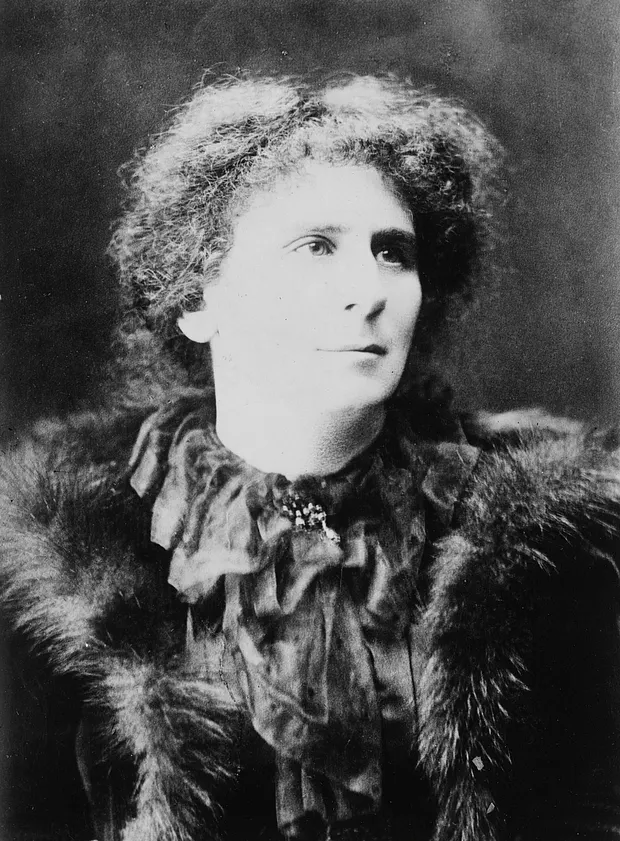
Hertha Ayrton była wybitną brytyjską inżynier, matematyczką i fizyk, która jako pierwsza kobieta odczytała własny artykuł naukowy przed Towarzystwem Królewskim w Londynie i wsławiła się m.in. pionierskimi badaniami nad łukiem elektrycznym oraz wynalezieniem wachlarza do rozpylania gazów bojowych stosowanego podczas I wojny światowej.
In 1899 a woman stood before Britain’s Institution of Electrical Engineers to explain why electric arc lamps hissed.
Her name was Hertha Ayrton, and no woman had ever presented her own paper there before. She knew why those lamps hissed because she’d spent years studying the carbon rods and the electric arc between them. Two days later, the Institution elected her its first female member.
Three years later, her name was put forward for fellowship in the Royal Society. This time being a woman wasn’t the problem. Being a married woman was. Under the law the Society applied, Hertha had no separate legal existence from her husband, so it refused to consider her.
She must have known this kind of nonsense well by then. Hertha was born Phoebe Sarah Marks in Portsmouth in 1854, the daughter of Levi Marks, a Polish Jewish watchmaker, and Alice Moss, a seamstress. Her father died when she was seven, and with eight children to support, her mother sent her to London at nine to live with an aunt who ran a school.
She was especially good at mathematics and earned money tutoring and working as a governess. As a teenager, she started calling herself Hertha after a poem by Algernon Charles Swinburne. With financial help from feminist Barbara Bodichon and support from people including George Eliot, she went to Girton College at Cambridge.
Cambridge allowed women to study and take examinations but didn’t give them degrees. Hertha got hers through the University of London instead. While still a student, she invented a device for dividing a line into equal parts so drawings could be enlarged or reduced accurately. She patented it in 1884, the first of 26 patents.
After marrying electrical engineer William Ayrton, she became fascinated by electric arc lighting. The lamps had an annoying problem with hissing and flickering. Hertha figured out why, published her research, and became a leading expert on the subject.
The Royal Society may not have made her a Fellow, but in 1906 it gave her the Hughes Medal for her work on the electric arc and the movement of ripples in sand and water. She was the first woman to receive it.
Hertha became interested in how air and water moved. Years later, during World War I, poison gas was settling into British trenches and sometimes remaining after an attack. Hertha believed what she’d learned could help move it.
She designed a large hand-operated fan to force gas out of a trench. The British military wasn’t convinced, and Hertha spent months demonstrating it and arguing for its use. Eventually thousands were produced and sent to British troops as the Ayrton anti-gas fan.
Hertha was also active in the women’s suffrage movement. She marched, gave money, and opened her home to women recovering after imprisonment and hunger strikes. Her daughter Barbara joined the movement too.
Marie Curie was one of her close friends. Hertha publicly defended her when Curie’s work was diminished or credited to Pierre. Hertha knew how easily a woman’s work could be attached to a man’s name. She wrote that the habit had “more lives than a cat.”
Hertha Ayrton died in 1923 at sixty-nine. Nature published an obituary discussing her Jewish background and sex in terms the journal would find embarrassing decades later. In 2021 Nature went back to its archives and called the obituary “a monument to sexism in science.”
Hertha had already left her name on 26 patents, her research, and thousands of fans sent into the trenches of World War I.
Odkryj więcej z Oficjalny blog emigracji 1969
Zapisz się, aby otrzymywać najnowsze wpisy na swój adres e-mail.
Kategorie: Uncategorized
